The project
InCommon: Reconceptualizing Individual and Collective Housing Preferences
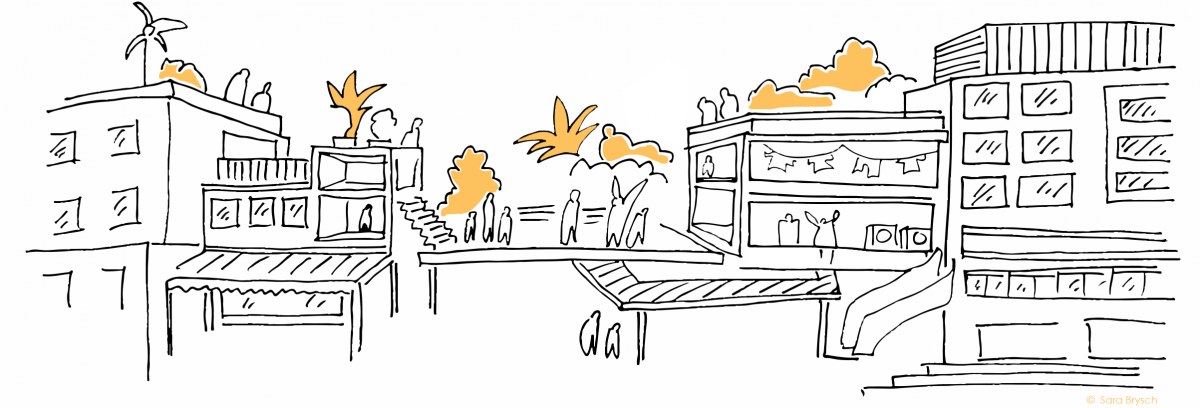
How do we want to live in the 21st century? Amidst an unprecedented housing crisis and rapid societal change, the way we organise our housing still focuses on traditional single-family homeownership. Meanwhile, alternative housing models based on the principles of sharing and collectivity are proliferating across Europe. Through sharing spaces and resources, and by bringing residents closer together, these ‘collaborative living’ forms seek to make housing more affordable, reduce environmental impact, and fight loneliness by facilitating stronger social connections amongst residents. These collaborative living forms promise more affordable housing, reduced environmental impact, and stronger social connections, yet little is known about whether, and under what conditions, a broader range of households would be willing to embrace such models
The InCommon project fills this gap by examining both the effective demand (early adopters already living collaboratively) and latent demand (households who have not yet chosen such arrangements). InCommon identifies the values, motivations, and housing attributes that shape people’s openness to sharing and collectivity. The project explores how people’s perceptions shift when they encounter alternative housing options. The innovative approach will generate a new conceptualization of ‘home’ that moves beyond conventional assumptions about privacy, autonomy, and the nuclear family. The resulting insights will offer a more nuanced way for policymakers and industry to define and measure housing preferences, with implications for how homes and neighbourhoods are designed and developed.
Knowledge Utilisation
Housing is deeply intertwined with social, economic, and political life. By uncovering the latent demand for collaborative living, InCommon provides actionable knowledge for policymakers, housing providers, and urban developers. InCommon’s societal impact strategy follows a two-pronged approach:
- Expanding the understanding of housing preferences to reflect emerging values around community, sustainability, and wellbeing.
- Amplifying new narratives about housing systems, supported by accessible outputs such as a documentary film and a book aimed at opinion leaders and the wider public.
The research project incorporates two novel knowledge co-creation ‘labs’ that will connect the research to existing stakeholders and partners.
The Theory Building Lab – or TBL – is primarily concerned with comparative international research collaborations between different countries and contexts. By collaborating with international academics and researchers across Europe, the InCommon project connects its scientific research efforts in the Netherlands to the wider collaborative living research across the continent, namely in Nordic countries (Sweden and Denmark), Central Europe (Austria and Switzerland) and North-Western Europe (the UK and the Netherlands).
The User Engagement Lab – or UEL – is aimed primarily at bringing together societal stakeholders throughout the life-course of the project, comprising representatives from public, market, civil-society, and community organisations involved in collaborative living. The UEL aims to ensure that the research is embedded in society by facilitating co-creation and share findings throughout the research period, instead of only at its conclusion. The goal of the UEL is to ensure findings are fit to inform the design of policies that support the development of housing with higher degrees of collectivity and sharing.
Research Team
Principal Investigator:
Dr. Darinka Czischke, Associate Professor, Faculty of Architecture and the Built Environment – TU Delft Profile
Senior Researcher:
Dr. Joris Hoekstra, Associate Professor, Faculty of Architecture and the Built Environment – TU Delft Profile
Senior Researcher:
Dr. Harry Boumeester, Assistant Professor, Faculty of Architecture and the Built Environment
PhD Researcher:
Zedi van Oostrom
PhD Researcher:
Miguel van Zevenbergen
* The InCommon-project is funded by a VIDI-grant of NWO.
 Co-Lab Research