The Co-Lab Research group at TU Delft is constantly looking for people interested in doing a PhD with us on collaborative housing.
Please note that, at the moment we do not have any open vacancies or funding for PhD researchers. If you have a good idea, strong motivation and a possible funding source to do a PhD with us, please do get in touch to discuss the possibilities!
Example of PhD topic:
“Collaborative housing: Unpacking emerging challenges for housing professional and their organisations”
Supervisors:
Dr. Darinka Czischke (d.k.czischke[at]tudelft.nl)
Prof.dr.ir. Vincent Gruis (v.h.gruis[at]tudelft.nl)
Description:
Europe is witnessing the re-emergence of “collaborative housing”, i.e. a wide variety of self-organised and self-managed collective housing projects. These include co-housing, Community Land Trusts (CLTs) and residents’ housing co-operatives, amongst others. Typically, these housing forms feature relatively high levels of user involvement in the conception, planning, design, construction and management of housing for their own residential use. They are also characterized by the establishment of reciprocal relationships, mutual help and solidarity amongst residents, as well as by new forms of non-speculative financing mechanisms. Sometimes these projects are targeted to specific socio-demographic groups (e.g. the elderly, women, etc.) and often they have high environmental standards. While in some European countries collaborative housing is part of long-standing traditions of cooperation and mutual help (e.g. Germany, Sweden, Denmark), in others they were rather marginal until recently (e.g. France, Belgium, Spain, etc.).
To realise their housing project, residents’ groups need to partner with a wide range of stakeholders, both individual and institutional, to access knowledge and resources. Professional housing providers in different parts of Europe are beginning to work with these residents’ groups for a variety of reasons, including improving the efficiency of their operations, empowering residents and local communities, and/or the wish to refresh their approaches through working and learning from grassroots actors. Responding to these new challenges requires a series of changes: on the one hand, housing professionals need to adapt the way they think and act to engage effectively and constructively with the different types of knowledge and competences of residents. On the other hand, their organisations need to transform accordingly. These developments call for empirical evidence on these developments in different European countries.
Possible PhD research questions could focus on particular aspects of either of the following three core aspects:
-Drivers (what motivates different stakeholders to collaborate in this type of initiatives?);
-Collaboration processes (how does collaboration take place?); and
-Organisational changes (what does collaboration mean for the housing associations involved?).
Current PhD Researchers
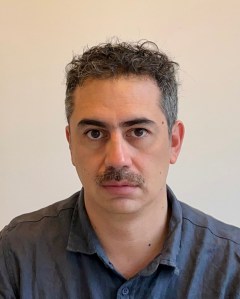
Juan Pablo Urrutia Muñoz (2024-current)
Juan Pablo Urrutia is Architect and Master in Management of Real Estate Projects from the Universidad de Chile, Master in Public Administration from the London School of Economics and Political Science and Master in Public Affairs from the Institut d’études politiques de Paris (Sciences Po). His research and consultancy work has been related to housing policies, housing deficit, social housing, informal habitat and lately on co-residence and housing strategies. He is currently working as a researcher in the PhD programme at TU Delft with Vincent Gruis and Darinka Czischke, his research seeks to understand how co-residence influences housing design and potentially could be developed as new dwelling typology.
He is also a researcher at the Housing Institute of the Universidad de Chile. Juan Pablo was co-curator of the Architecture and Urbanism Biennial of Chile in 2015 and 2019, Director and General Secretary of the Chilean Architects Association, Head of the Architectural School at the Universidad de Chile and he received the National Young Promotion Award in 2018. Juan Pablo is author of the book “Co-residence Strategies: Informal Housing Typologies for Extended Families” (2019 and 2025, 2nd edition) and co-editor of “Collective habitat, 50 housing ideas” (2018) and “Guía para la formulación de planes maestros integrales de recuperación de barrios y viviendas” (2017).
Past PhD Researchers
- Valentina A. Cortés Urra – thesis title: ‘Collaborative housing in Chile: Policy, Precedents, Scenarios and Long-term Implementation Strategies’
- Dr Macarena Gaete Cruz – thesis title: ‘The challenge of collaboration in urban design. Co-designing resilient public spaces in Chile’
- Dr Sara Brysch – thesis title: ‘Towards a new Existenzminimum. Defining principles for the design of affordable collaborative housing’

 Co-Lab Research